Worked example · Accounting firm
A company customer: who owns it, and who has to be checked
A company becomes a customer. Before any work starts, the firm records who owns and controls it. duely works out which people must be checked, and asks each of them for consent and identity verification.
- Customer
- Southern Cross Digital Pty Ltd (sample)
- Type
- Company
- Owners
- A person and a company shareholder
- Stage covered
- Onboarding the customer
Sample data. This is an illustrative example, not a real customer, and the screens contain no real customer information.
- Stage 1 Onboard the customer
- Stage 2 Open the engagement
- Stage 3 Assess risk
- Stage 4 Approve and conclude
Onboard the customer
Add the company
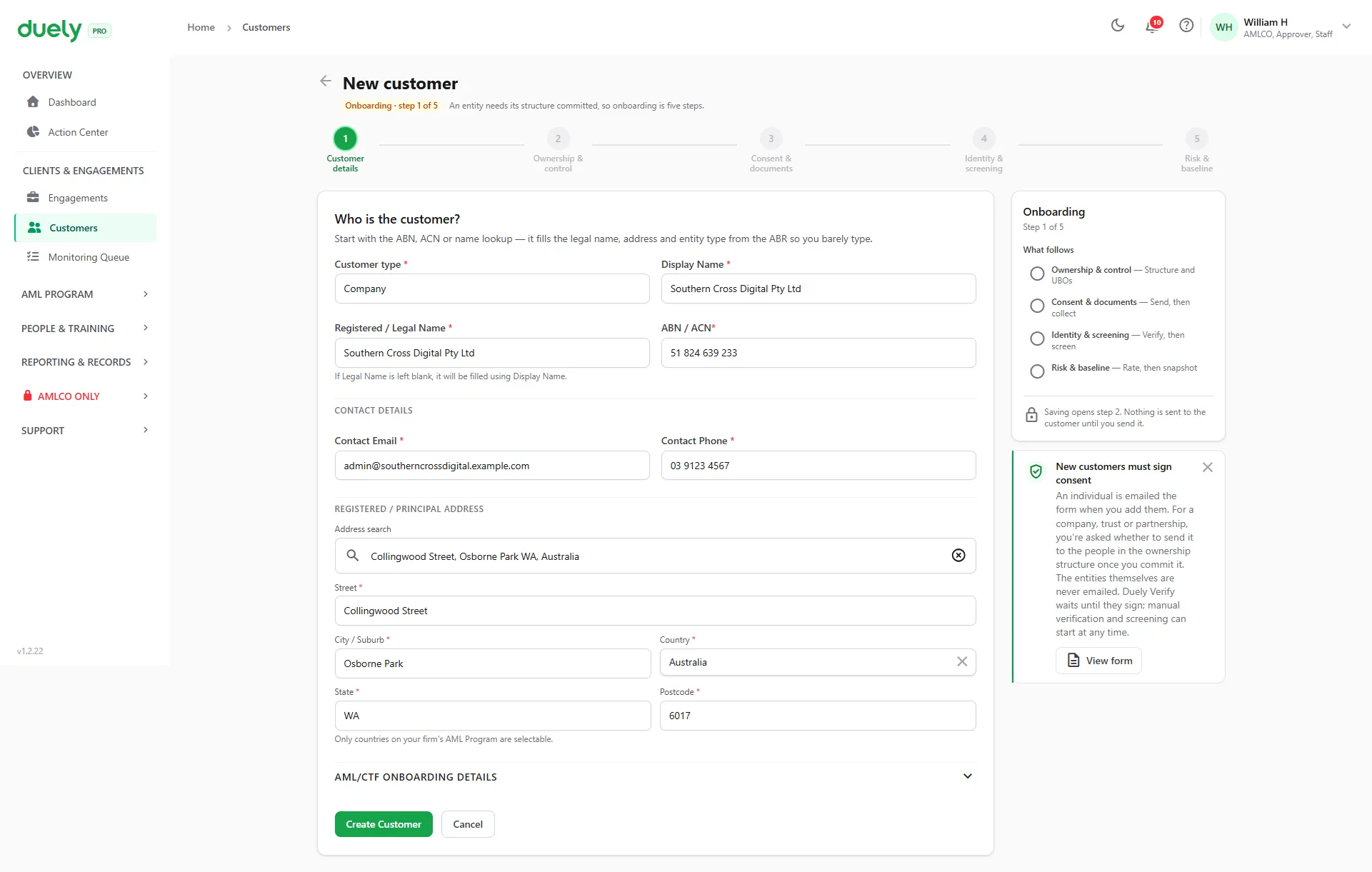
The firm adds the company as a customer. A company has one more onboarding step than an individual, because its ownership and control structure has to be recorded.
A company needs its structure recorded, so onboarding has five steps.
Record who owns and controls it
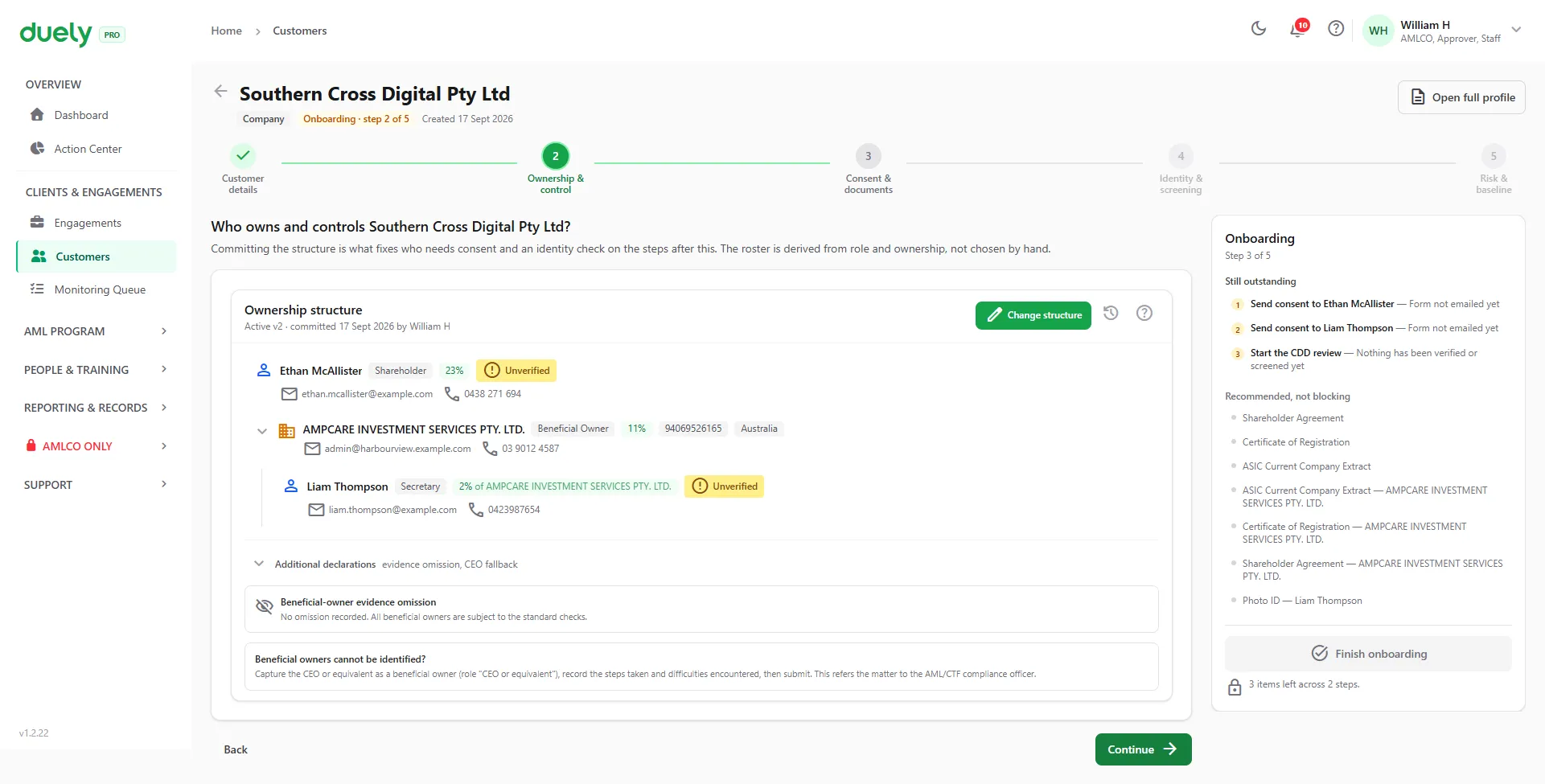
The firm enters the shareholders and the people in control. Committing the structure fixes who needs consent and an identity check. duely works out those people, including the people behind a company shareholder, so no one has to pick them by hand.
The people to be checked are worked out from the structure.
Ask each person for consent
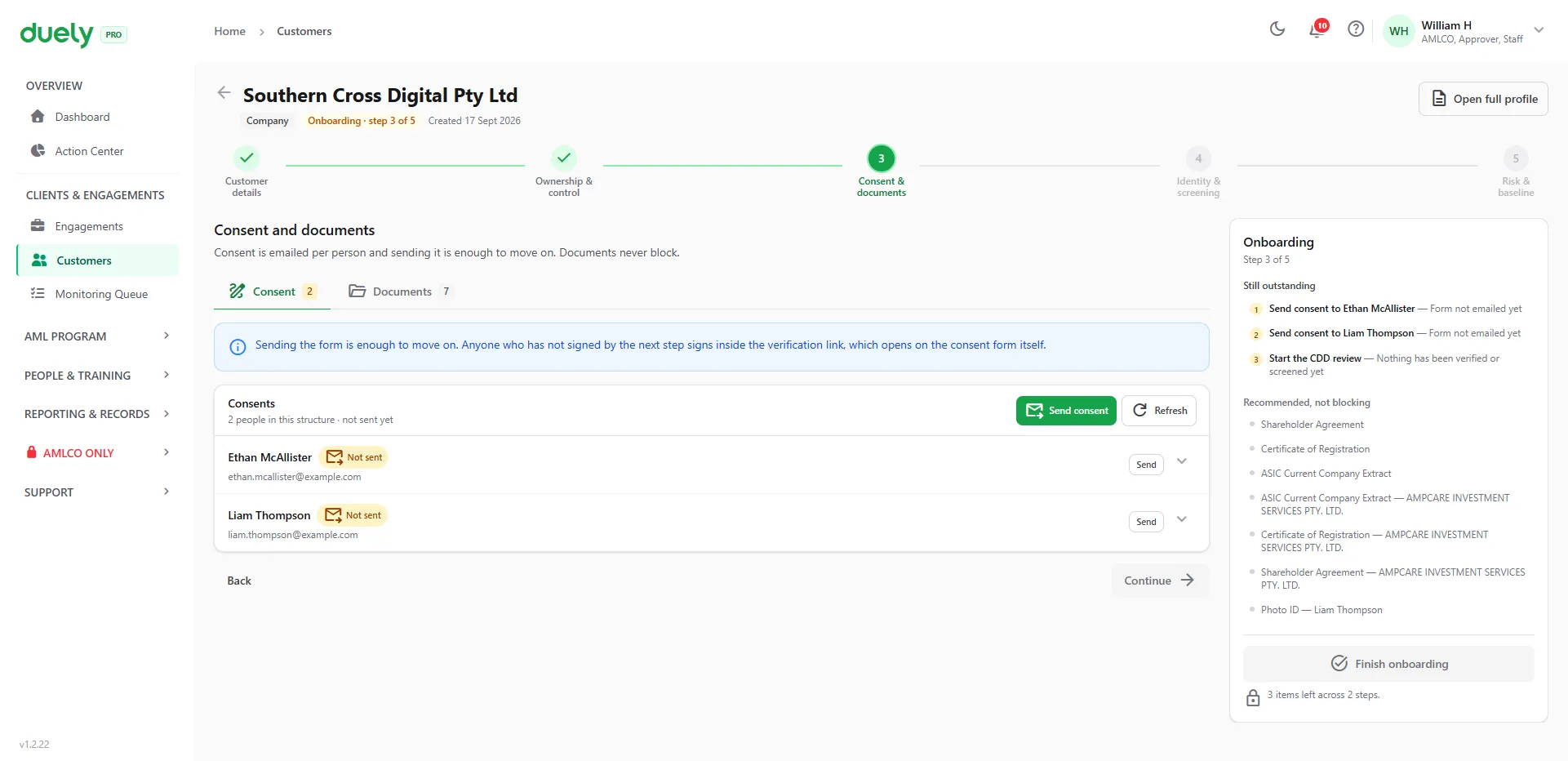
The firm is asked whether to send the consent form to the people in the structure. Each person gets their own form. The companies themselves are never emailed.
Consent is requested from each individual, not the entity.
Verify and screen everyone in the structure
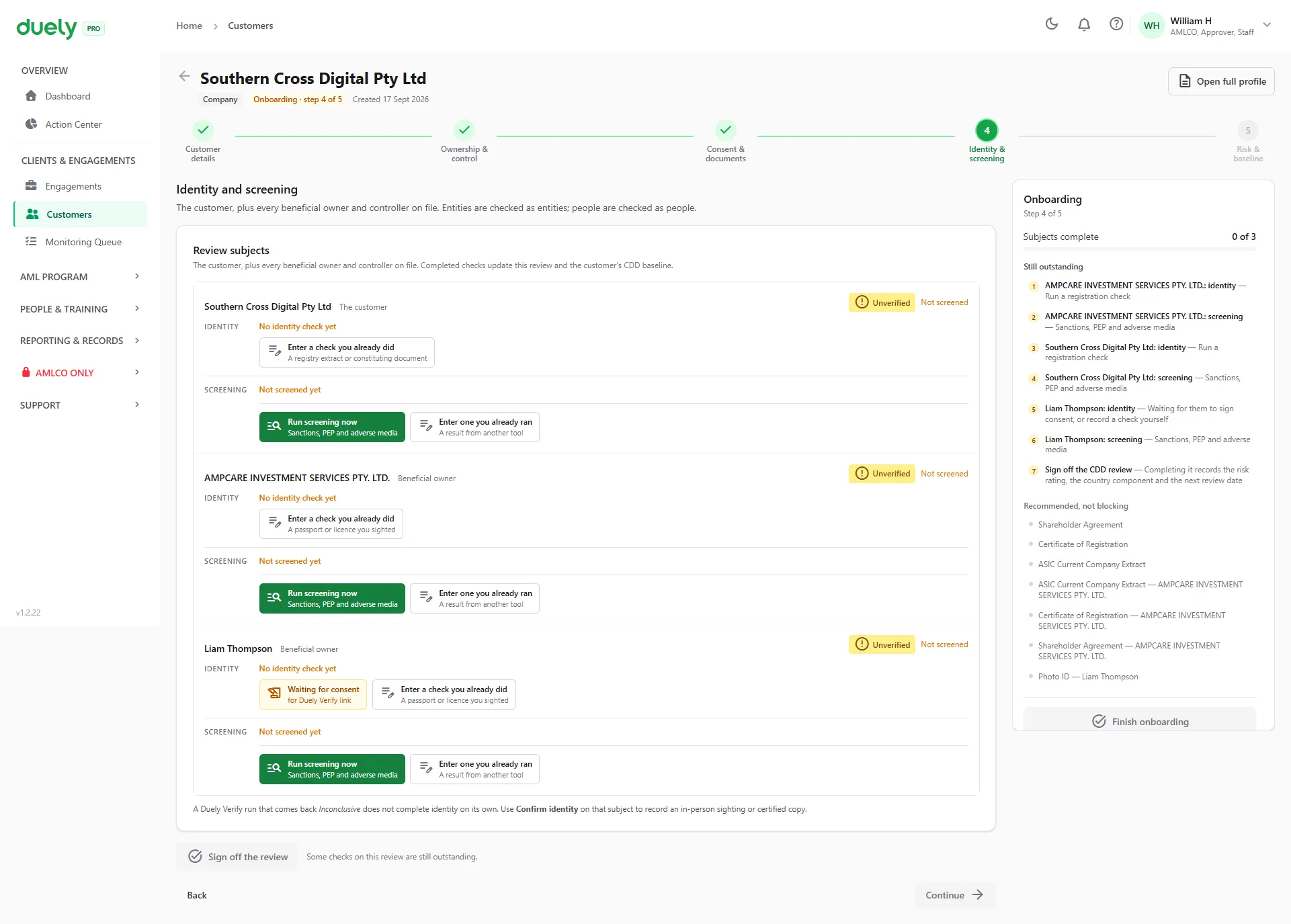
The company and each person behind it become review subjects. A company is checked against the registry. People verify their identity on their own phone once they have signed consent. Everyone is screened against sanctions, PEP and adverse media lists.
One review covers the company and every person behind it.
Available at any point
You can do these at any stage.
-
Request documents
Ask a customer for a document through the portal. They upload it and it lands on their record.
-
Record a threshold transaction report
When physical cash of $10,000 or more is involved, capture a draft threshold transaction report (TTR) against the engagement.
-
Report unusual activity
Any staff member can raise a concern. It goes to the AMLCO, who decides whether to file a suspicious matter report (SMR).
What the firm holds at the end
The firm holds the company's recorded structure, consent requested from each person who must be checked, and a single review covering the company and everyone behind it. Opening an engagement for this customer follows the same stages as the first example.
The full step-by-step model is on How it works.
More worked examples
See it with your own customers
Book a demo and we'll walk through an engagement like yours in duely.